Invasion of Privacy Laws in the Philippines: What Is Illegal?
A practical guide to invasion of privacy laws in the Philippines, including data privacy, unauthorized recordings, cybercrime, voyeurism, online harassment, and civil privacy claims.

A practical guide to invasion of privacy laws in the Philippines, including data privacy, unauthorized recordings, cybercrime, voyeurism, online harassment, and civil privacy claims.

Can someone post your personal information online without permission in the Philippines? Learn when disclosure may violate the Data Privacy Act, what evidence to preserve, and what to do next.

Learn the criminal penalties and administrative fines that may apply for violations of the Philippine Data Privacy Act, including unauthorized processing, disclosure, negligent access, improper disposal, breach concealment, and repeat infractions.

Learn what may count as a data privacy violation in the Philippines, including unauthorized processing, disclosure, negligent access, improper disposal, security failures, and violations of data subject rights.

Understand the difference between a Personal Information Controller (PIC) and Personal Information Processor (PIP) under the Philippine Data Privacy Act, including roles, responsibilities, outsourcing, and practical examples.

Learn your data privacy rights under RA 10173, including access, correction, objection, deletion, portability, damages, and filing an NPC complaint.
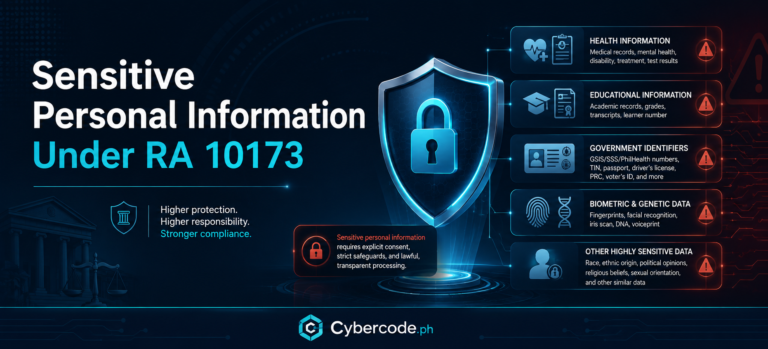
Sensitive personal information under RA 10173 includes higher-risk data such as health, education, government-issued identifiers, race, marital status, age, religious or political affiliations, and certain criminal-proceeding information. This guide explains what counts, how it differs from ordinary personal information, and what Philippine organizations should do when processing it.

Understand what counts as personal information under the Philippine Data Privacy Act, with examples, sensitive-data distinctions, business implications, and practical compliance guidance.
A practical guide to Republic Act No. 10173, the Philippine Data Privacy Act of 2012—covering personal information, data subject rights, lawful processing, business obligations, violations, penalties, and the National Privacy Commission.